Open carrier
- Price
- The standard rate
- Protection
- Exposed to weather and road dust
- Availability
- Lots of trucks, faster pickup
- Best for
- Daily drivers, used and new cars
Find car shipping companies
Tools
Popular cities
Popular routes
Best Car Shipping Companies is a free directory of verified auto transport companies. Compare them in your state and city, no sign-up.
Popular: Miami, FL Houston, TX Philadelphia, PA Orlando, FL Chicago, IL
Browse the directory
Tap your state on the map to compare local car shipping companies and the carriers that serve it from other states. Darker states have more companies based there.
Companies based in the state
Popular cities · most companies based there
Video guide · 3 min
A quick walkthrough of the directory: find companies in your city, narrow them down, compare them side by side and check each one’s FMCSA record before you ask for a quote.
 Play
PlayHow it works
Most cross-country moves are booked one to two weeks ahead and take about a week on the road. Here is what happens, and when.

Pick two or three licensed companies that run your route. Compare the price, the pickup window, open or enclosed trailer and the cargo insurance limit.
Carriers usually quote a 1–5 day window. Need a fixed date? Expedited service guarantees it for an extra fee.
Walk around the car with the driver and mark every scratch on the Bill of Lading. Take your own dated photos too.
Compare the car with the pickup report. New damage goes on the Bill of Lading before you sign — that note is the start of any claim.
Car shipping cost
Shipping a standard sedan on an open carrier usually costs $500 to $2,000. Distance sets the base price; the car, the trailer and the season move it up or down. Try your trip:
Estimate e.g. Miami → New York
$950–$1,350
Transit 3–6 days after pickup
A rough guide from typical 2026 prices, not a quote. Exact routes, dates and pickup spots change the price.
Get an estimate for your exact route →| Distance | Example route | Typical cost | Transit time |
|---|---|---|---|
| Under 500 miles | Tampa → Atlanta | $500–$850 | 1–3 days |
| 500–1,000 miles | Chicago → New York | $750–$1,150 | 2–4 days |
| 1,000–1,500 miles | Miami → New York | $950–$1,350 | 3–6 days |
| 1,500–2,500 miles | Houston → Los Angeles | $1,150–$1,650 | 5–8 days |
| Coast to coast (2,500+ miles) | Los Angeles → New York | $1,400–$2,000 | 6–10 days |
Trailer type
Most cars ride on open carriers — the double-deck trailers you pass on the interstate. Enclosed trailers are for cars whose value or finish needs a roof over them.
13% of companies in the directory offer enclosed transport.
Who moves your car
Both are legal and both must be registered with the FMCSA. The difference is who is standing between you and the truck.
1,141 in the directory
The company that quotes you is the company that drives your car.
135 in the directory
The broker posts your car to a network of carriers and books one for you.
From our data
We checked every company in the directory against FMCSA records. A few things stand out.
89%
run their own trucks. The rest are brokers who book carriers for you.
11 yrs
average time in business; the longest-running has operated since 1974.
13%
offer enclosed trailers for classic and high-value cars.
108 of 108
carriers with an FMCSA safety rating are rated Satisfactory.
Updated October 2026 · How we verify companies
Before you book
Five minutes of checking before you pay a deposit.
The operating authority should say “Active”, and the name on the record should match the company you’re talking to.
Check a company for free →The cargo limit should be higher than your car’s value.
With a broker, get the name of the carrier that will haul your car before pickup.
Compare at least three quotes for the same dates. One far below the rest is a warning sign.
See what your route should cost →Inspect the car with the driver at pickup and again at delivery, and note every scratch.
Printable inspection form →FAQ
Short, straight answers to what people ask most before they ship a car.
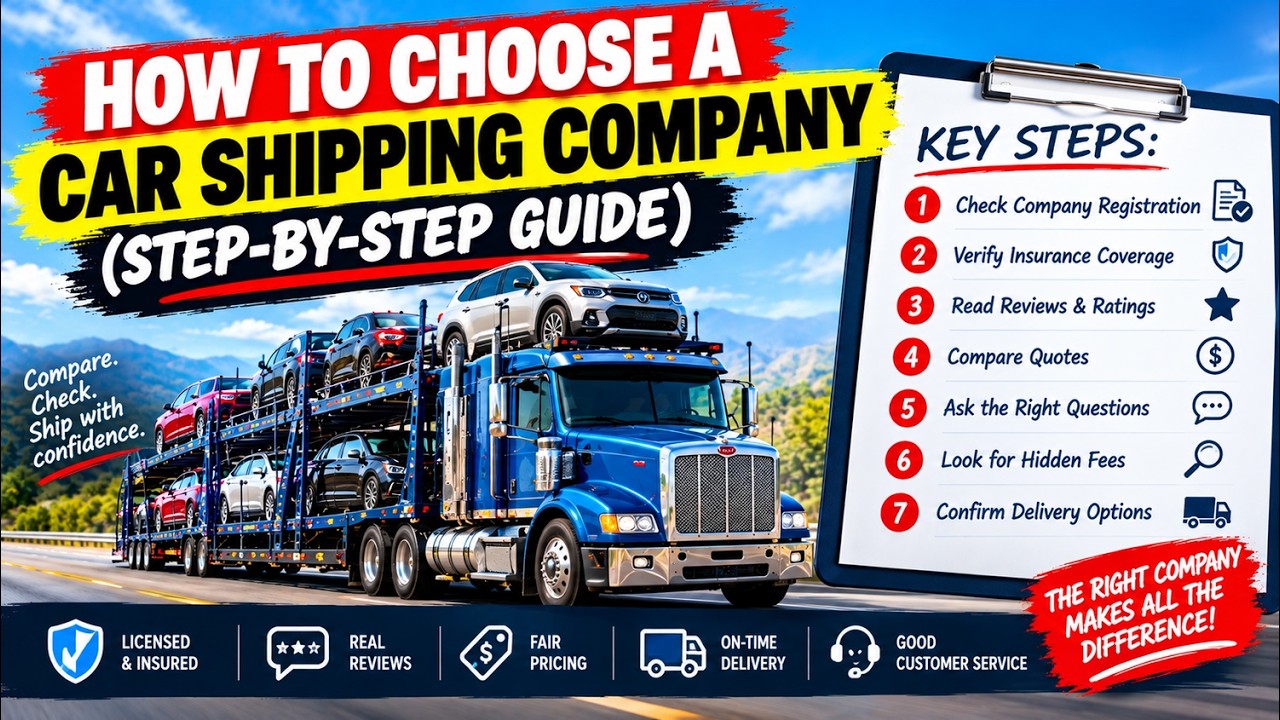
There is no single best car shipping company for every move: the right one depends on your route, your car and your dates. Look for a company that holds active FMCSA operating authority and insurance (check its USDOT number), regularly runs or books your route, gives a written all-in price instead of a teaser quote, says up front whether it is a carrier or a broker, and has recent reviews from customers on similar moves. Compare verified companies in your state here, then ask two or three of them to quote the same dates.
Most customers pay between $500 and $2,000 to ship a standard sedan on an open carrier. Short trips under 500 miles usually cost $500–$850, while coast-to-coast moves typically run $1,400–$2,000. Enclosed transport adds roughly 40–60%. Distance, vehicle size, season and pickup location have the biggest effect on price.
Transit takes about 1–3 days for trips under 500 miles and 6–10 days coast to coast. Add 1–5 days for the carrier to schedule pickup. Expedited service shortens the pickup window for an extra fee.
Yes, when you use a licensed company. Every interstate auto carrier must hold an active USDOT number and operating authority (MC number) from the FMCSA and carry cargo insurance. Check both before you book, and inspect the car with the driver at pickup and delivery.
A carrier owns the trucks and moves your car itself. A broker arranges the move with a partner carrier from its network. Brokers often find a truck faster on busy routes; carriers give you direct contact with the company that has your car. Both must be registered with the FMCSA.
Open transport is the standard choice for everyday cars: it is cheaper and trucks are easier to book. Choose enclosed transport for classic, exotic, luxury or freshly restored vehicles that need protection from weather and road debris.
You or someone you trust (18+) needs to hand over the keys, inspect the car with the driver and sign the Bill of Lading at both ends. Note any existing damage on the Bill of Lading before the car is loaded.
Most carriers allow up to about 100 lbs of personal items in the trunk or cargo area, but these are not covered by the carrier's cargo insurance. Remove valuables, toll tags and loose items before pickup.
Wash the car and take dated photos from every side, leave about a quarter tank of fuel, remove personal belongings and toll transponders, disable alarms, and give the driver a spare key. Tell the company in advance if the car does not run.
Best Car Shipping Companies (BCSC) is a free, independent directory of US car shipping companies. We are not a broker and do not move cars ourselves. Every listed carrier and broker is checked against FMCSA records (USDOT number, operating authority and insurance) before it appears, and a quote request goes only to the company you choose.
Guides
Prices, timing, scams and paperwork, explained with real numbers.
For most people, the cheapest way to ship a car is an open carrier, door to door, between two big metro areas, with a pickup window of a week or more and outside the summer and snowbird peaks. Set up that way, a standard sedan goes coast to coast for about $1,350–$1,950. The same car […]
Read articleWhen you ship a car, it travels under the carrier’s cargo insurance, and that is included in the price. You don’t need to buy a separate policy to ship a car. Still, “fully insured” on a quote tells you very little. The coverage belongs to the truck, not to your car: the limit is shared […]
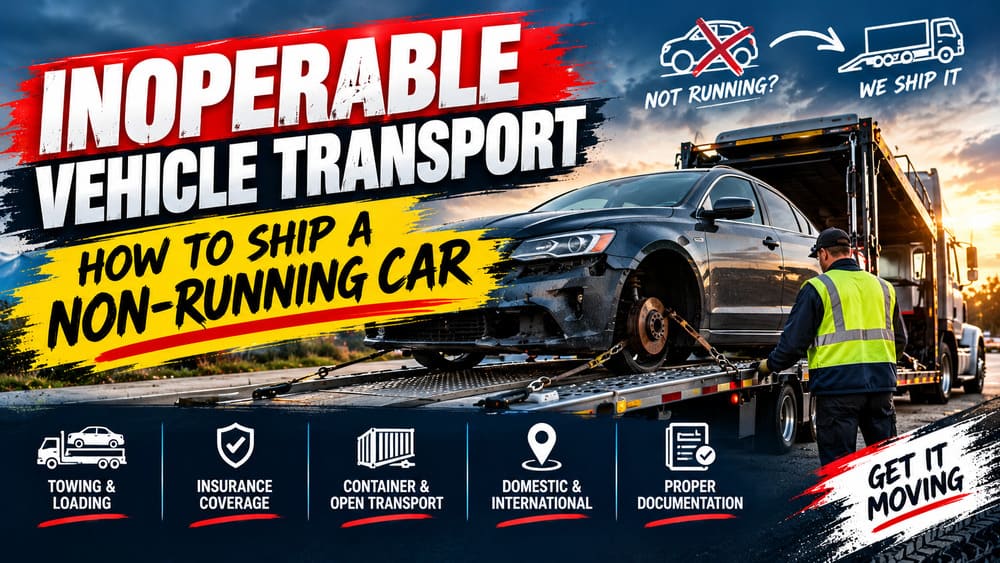
Read articleBought a car that doesn’t run at an auction or from a seller across the country, and need it brought home? Yes, you can ship it, but it is one of the harder jobs in car shipping. Plenty of carriers will simply say no, and the ones that say yes charge more and may take […]
Read articleShipping a Tesla, or any electric car, works almost exactly like shipping a gas car: it rides on the same open or enclosed carrier, with the same drivers and the same paperwork. The differences are in the details. The car should leave with about 30–50% charge, the driver needs a key card rather than your […]
Read articleIf you are already driving a moving truck across the country, towing your car behind it usually costs less than shipping it: roughly $500–$1,125 for a 1,000-mile move with a U-Haul auto transport trailer, against $850–$1,250 to ship a sedan on an open carrier. The gap closes once you count the 55 mph speed cap, […]
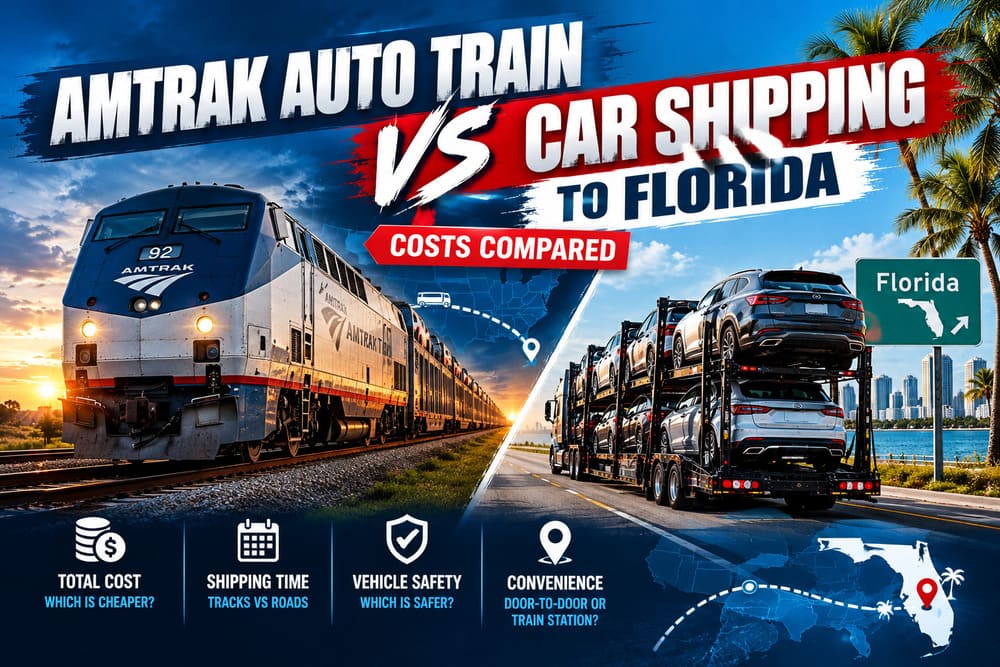
Read articleAmtrak’s Auto Train carries you and your car between Lorton, Virginia, just outside Washington, DC, and Sanford, Florida, near Orlando. For a solo traveler or a couple heading south from the Northeast, it usually costs less than shipping the car and flying, and about the same as driving the whole way, minus roughly 900 miles […]
Read articleThere are 23,562 trucking companies in the United States that specialise in hauling vehicles: active interstate carriers that list cars as their cargo and not general freight. The typical one is a single truck, has been registered for about ten years, carries $1 million of liability insurance and has never been given a federal safety […]
Read articleBetween July 1 and September 30, 2026, 1,156 car-hauling trucking companies lost their federal operating authority without asking to. That is roughly one in every 96 interstate carriers registered to haul vehicles, or about 13 every day. In 94% of cases the reason was the same: their insurance was cancelled and nothing replaced it. A […]
Read articleFor car shipping companies
Listing on Best Car Shipping Companies is free. Every company goes through the same FMCSA check. Premium adds a “Get a quote” button that sends customer requests straight to your inbox.
List your company