
How Much Does It Cost to Ship a Car? (2026 Guide)
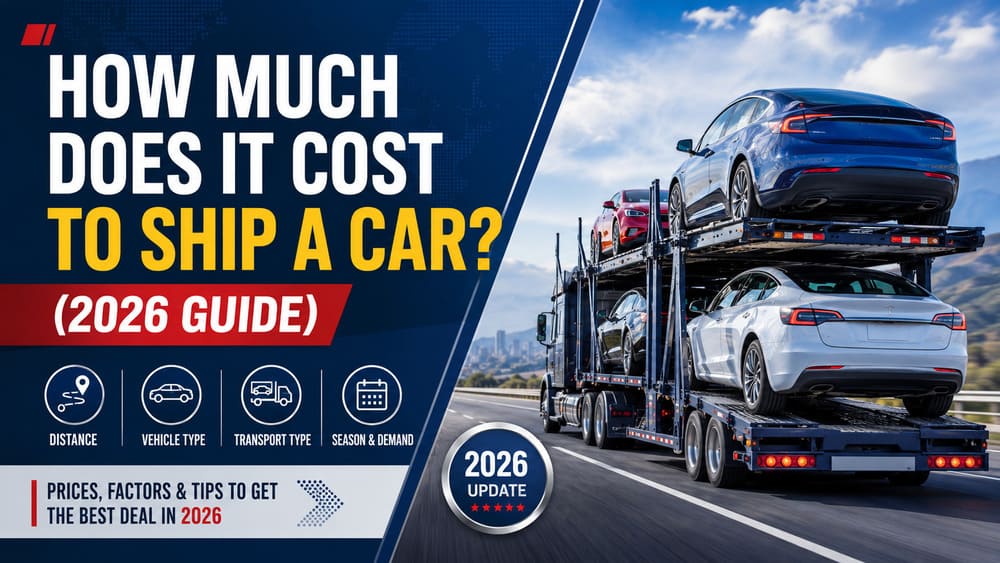
How much does it cost to ship a car in 2026? Whether you're relocating to a new state, buying a vehicle online, or heading south for the winter, that's the first question you need answered. Most Americans pay between $550 and $1,800 for standard open-carrier transport, with the national average sitting around $1,150–$1,200 depending on route and vehicle size. This guide breaks down real 2026 rates by distance and carrier type, explains what drives the price up or down, and shows you exactly how to get the best deal.
How much does it cost to ship a car in 2026?
The nationwide average cost to ship a car in 2026 is approximately $1,150–$1,200, based on a typical open-carrier shipment of around 1,000 miles. Prices range from $540 for short in-state moves to over $3,000 for long-distance enclosed transport on coast-to-coast routes.
For the average domestic shipment, most people fall within the $700–$1,500 range. Enclosed transport — chosen for luxury, classic, and high-value vehicles — adds 30–60% to the open-carrier base price.
Quick answer: Shipping a car costs $550–$1,800 for most domestic routes with open transport. Enclosed transport ranges from $900 to $2,900. The national average for 2026 is around $1,150–$1,200.
Car shipping cost by distance (2026 rates)
Distance is the biggest single factor in your final price. However, the cost per mile decreases as the route gets longer, because carriers spread fixed expenses across more miles. Short hauls have the highest per-mile rate for exactly this reason.
Distance | Open transport | Enclosed transport | Per mile (open) |
|---|---|---|---|
Under 300 miles | $400–$700 | $700–$1,100 | $1.50–$2.00 |
300–500 miles | $650–$900 | $950–$1,400 | $1.10–$1.50 |
500–1,000 miles | $700–$1,150 | $1,000–$1,800 | $0.80–$1.20 |
1,000–2,000 miles | $1,000–$1,500 | $1,500–$2,200 | $0.61–$1.00 |
Over 2,000 miles | $1,300–$1,800 | $2,000–$2,900 | $0.55–$0.75 |
Per-mile rates in 2026 run from $0.61 to $2.00 for open transport, depending on total distance. Longer routes naturally have lower per-mile costs even though the total bill is higher.
Open vs. enclosed transport: which should you choose?
The carrier type is the second-biggest factor after distance. There are two primary options, and the right choice depends on your vehicle and budget.
Open transport is the most common and affordable method. Your car rides on an open multi-car trailer alongside 7–10 other vehicles — the same way new cars are delivered from manufacturers to dealerships. It's exposed to weather and road debris, but this method is safe and reliable for standard vehicles. Open transport ranges from $550 to $1,800 for most domestic routes in 2026.
Enclosed transport places your vehicle inside a covered trailer, fully protected from the elements, road grime, and weather. Because these trailers carry fewer vehicles (typically 3–6), the cost is significantly higher — ranging from $900 to $2,900. Enclosed shipping is the right call for luxury vehicles, classics, collector cars, and high-value EVs where paint and finish protection justifies the premium.
Factor | Open transport | Enclosed transport |
|---|---|---|
2026 cost range | $550–$1,800 | $900–$2,900 |
Weather protection | No | Yes |
Carrier availability | High | Limited |
Lead time | 1–3 days | 3–7 days |
Best for | Standard vehicles | Luxury, classic, EV |
Extra cost vs. open | — | +30% to +60% |
What factors affect how much it costs to get a car shipped?
Understanding what you'll pay for car shipping means looking beyond distance and carrier type. Here are the key variables that shift your final quote:
Vehicle size and weight. Larger vehicles take up more trailer space and consume more fuel per car. A standard sedan might cost $700–$900 cross-country; a full-size SUV, pickup, or minivan typically adds $100–$250 to that figure. Oversized or lifted trucks cost even more.
Door-to-door vs. terminal-to-terminal. Door-to-door service, where the carrier picks up and delivers to your address, costs roughly 10–15% more than terminal shipping, where you drop off and collect at a designated hub.
Seasonality. Demand peaks in spring and summer (May–August), pushing rates up by $200–$300. The cheapest month to ship in 2026 is February, when carrier availability is highest and rates average 10–15% below the annual average. October and November are the next most affordable window.
Route popularity. High-volume corridors like California–Texas and New York–Florida have more available carriers, which drives competition and lower prices. Remote or rural destinations cost more due to detours.
Vehicle operability. Non-running vehicles require special winch loading equipment. Expect an additional $150–$300 surcharge for inoperable cars.
Expedited shipping. Standard lead times run 1–7 days depending on the route. Guaranteed pickup within 24–48 hours adds $250–$625 to your total.
Fuel surcharges. Carriers factor diesel prices into every quote. Some companies apply a separate fuel surcharge — always ask whether the quoted price is all-inclusive.
Additional insurance. Standard carrier liability covers transit damage, but coverage limits vary. Extra insurance typically costs $150–$300 and is worth considering for long-distance moves.
Sample costs for popular U.S. shipping routes in 2026
Here are current average prices for common domestic shipping lanes, based on open-carrier transport for a standard sedan:
Route | Distance | Open transport avg. | Enclosed transport avg. |
|---|---|---|---|
New York → Florida | ~1,280 mi | $1,150–$1,315 | $1,700–$2,100 |
California → Virginia | ~2,700 mi | $1,600–$2,225 | $2,500–$3,200 |
Michigan → Texas | ~1,450 mi | $1,200–$1,500 | $1,800–$2,200 |
Florida → Illinois | ~1,300 mi | $800–$1,100 | $1,300–$1,900 |
Georgia → Ohio | ~660 mi | $700–$950 | $1,100–$1,500 |
Massachusetts → Florida | ~1,400 mi | $650–$825 (sedan) | $950–$1,400 |
How to get the best car shipping rate in 2026
Knowing what drives costs puts you in a position to act. Here is a step-by-step approach to keeping the price down without sacrificing reliability:
Book 2–4 weeks in advance. Carriers fill their routes ahead of time. Last-minute bookings almost always cost more. Early booking also gives you time to compare multiple quotes without pressure.
Stay flexible on pickup dates. Offering a 3–5 day pickup window lets carriers consolidate loads heading in the same direction, which typically results in a lower rate than a fixed date.
Get at least three quotes. Prices for the same route can vary by $200–$400 between carriers and brokers. Always compare before committing.
Choose open transport for standard vehicles. Unless your vehicle genuinely needs enclosed protection, open transport is safe, reliable, and significantly cheaper.
Ship during off-peak months. February, October, and November consistently offer the lowest rates of the year. Avoiding May through August can save $200–$300 on a typical shipment.
Use terminal-to-terminal if you live near a hub. The 10–15% saving is meaningful on longer routes if you can drive to a carrier terminal.
Remove all personal belongings. Items left in the car add weight, are excluded from carrier liability, and can create disputes at delivery. Remove everything of value before handover.
Verify the carrier's FMCSA registration. Always check that your carrier or broker is licensed with the Federal Motor Carrier Safety Administration at www.fmcsa.dot.gov before paying a deposit.
Common mistakes that increase your car shipping cost
Several traps can make your final bill higher than the initial quote. Here is what to watch for:
Accepting a lowball quote. Some brokers advertise unrealistically low prices to capture your information, then call back with a revised rate. Always ask for a binding written quote, not an estimate.
Ignoring the insurance details. Carrier liability varies widely. Ask for the certificate of insurance and confirm the deductible before signing. Supplement with your own auto policy if needed.
Booking the cheapest option without checking reviews. A carrier $100 cheaper than competitors but with a pattern of delivery delays or damage claims is not a bargain. Check FMCSA ratings and third-party reviews together.
Shipping during peak season without budgeting for it. If you must ship in summer, budget an extra $200–$300 over the off-season rate and book even earlier to secure a slot.
Leaving personal items in the vehicle. Beyond the liability issue, some carriers charge extra for the added weight. Empty the trunk and rear seats before pickup.
Ready to find out exactly what it will cost to ship your car? Compare quotes from top-rated carriers and get the best rate for your specific route.
Get your free 2026 car shipping quote →
Frequently asked questions
How much does it cost to ship a car cross country in 2026?
Shipping a car cross country in 2026 costs an average of $1,300–$2,225 with open transport for routes over 2,000 miles. Enclosed transport on the same distances ranges from $2,000 to $3,200. A California-to-Virginia shipment averages around $2,225 with open carriers. The final price depends on your exact pickup and delivery locations, vehicle size, and whether you ship during peak summer months or the more affordable fall and winter window.
How much does it cost to ship a car 500 miles?
Shipping a car 500 miles costs approximately $650–$900 with open transport and $950–$1,400 with enclosed transport in 2026. The per-mile rate for this distance runs about $1.10–$1.50. Shorter routes carry higher per-mile costs because carriers face the same fixed expenses regardless of distance traveled.
Is open or enclosed car transport cheaper?
Open transport is consistently 30–60% cheaper than enclosed transport for the same route. On a typical 1,000-mile shipment, the difference is $400–$700. Open carriers are safe and reliable for standard sedans, SUVs, and trucks. Enclosed transport is only worth the extra cost for luxury vehicles, classics, exotics, or any car where protecting the paint and finish justifies the premium.
What is the cheapest time of year to ship a car?
February is the cheapest month to ship a car in 2026, with rates averaging 10–15% below the annual average due to low demand and high carrier availability. October and November are the next most affordable window. The most expensive period is May through August, when summer moving season drives rates up by $200–$300. December is the most expensive individual month due to holiday carrier shortages and winter weather delays.
How long does it take to ship a car across the U.S.?
Standard transit times for open-carrier coast-to-coast shipping run 7–10 days, including 1–3 days lead time to find and assign a carrier. Shorter regional routes (under 1,000 miles) typically take 2–5 days total. Enclosed transport takes longer — usually 3–7 days in transit — because fewer carriers operate in that segment. Expedited service can guarantee pickup within 24–48 hours for an added fee of $250–$625.
Related posts

Blog
Car Shipping Quotes: Compare Companies in the USA
Car shipping quotes are price estimates from auto transport companies for moving a vehicle from a pickup location to a delivery location.
Blog
How Much Does It Cost to Ship a Car Internationally? (Pricing Guide)
Destination is the single biggest variable in international auto shipping. Ocean freight rates vary widely based on route demand, port infrastructure, and available carriers.
Blog
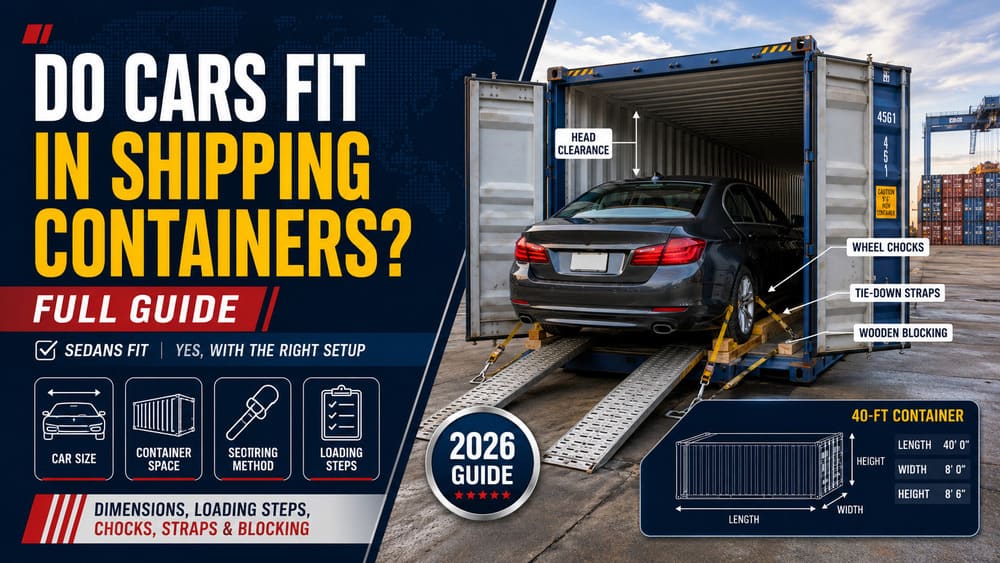
Do Cars Fit in Shipping Containers? Full Guide
Car container shipping is a vehicle transport method where a car is loaded inside a steel shipping container and moved by truck, rail, or ocean vessel.